
Mark Crangle, Cumbria Clock Company
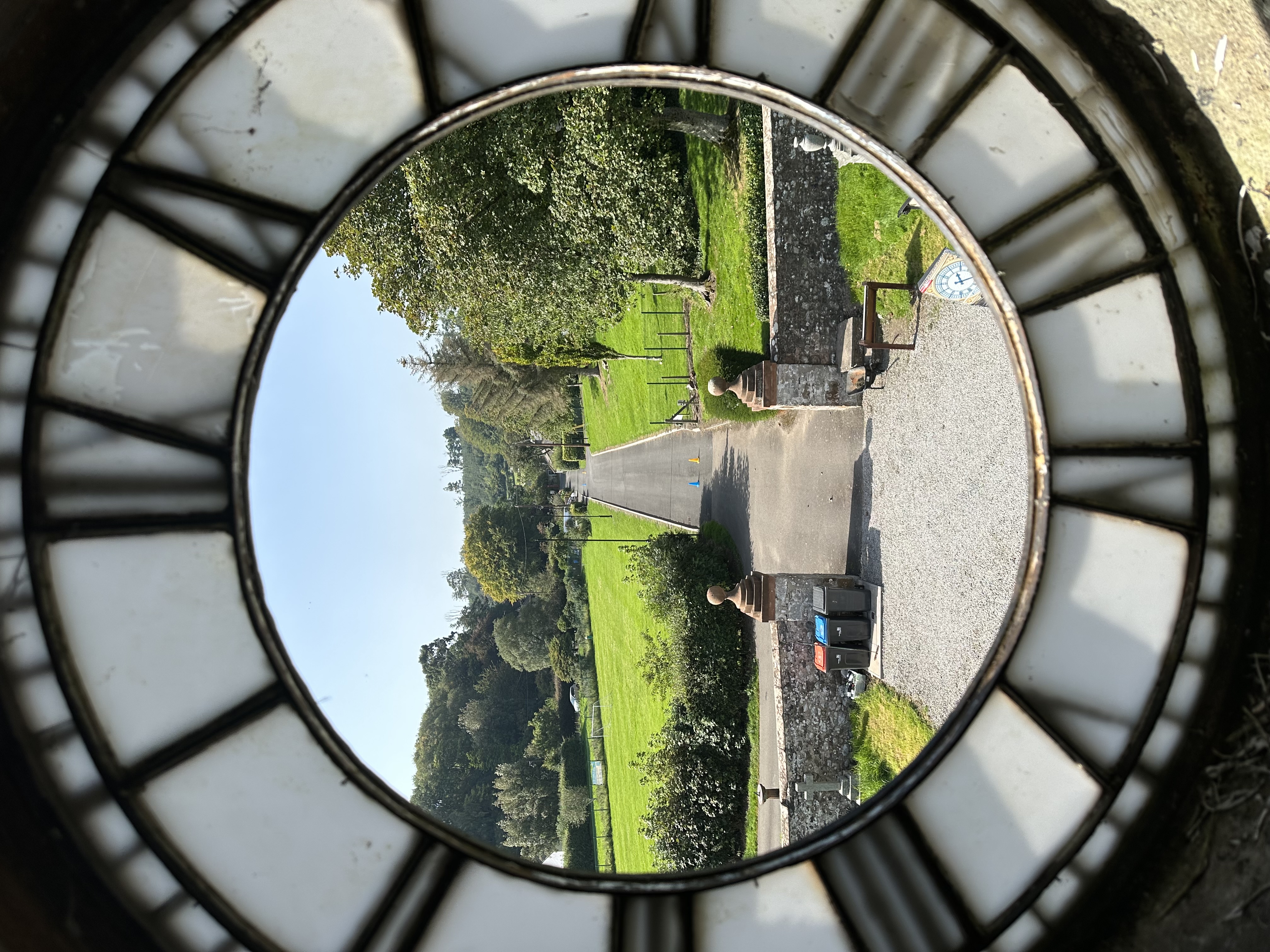
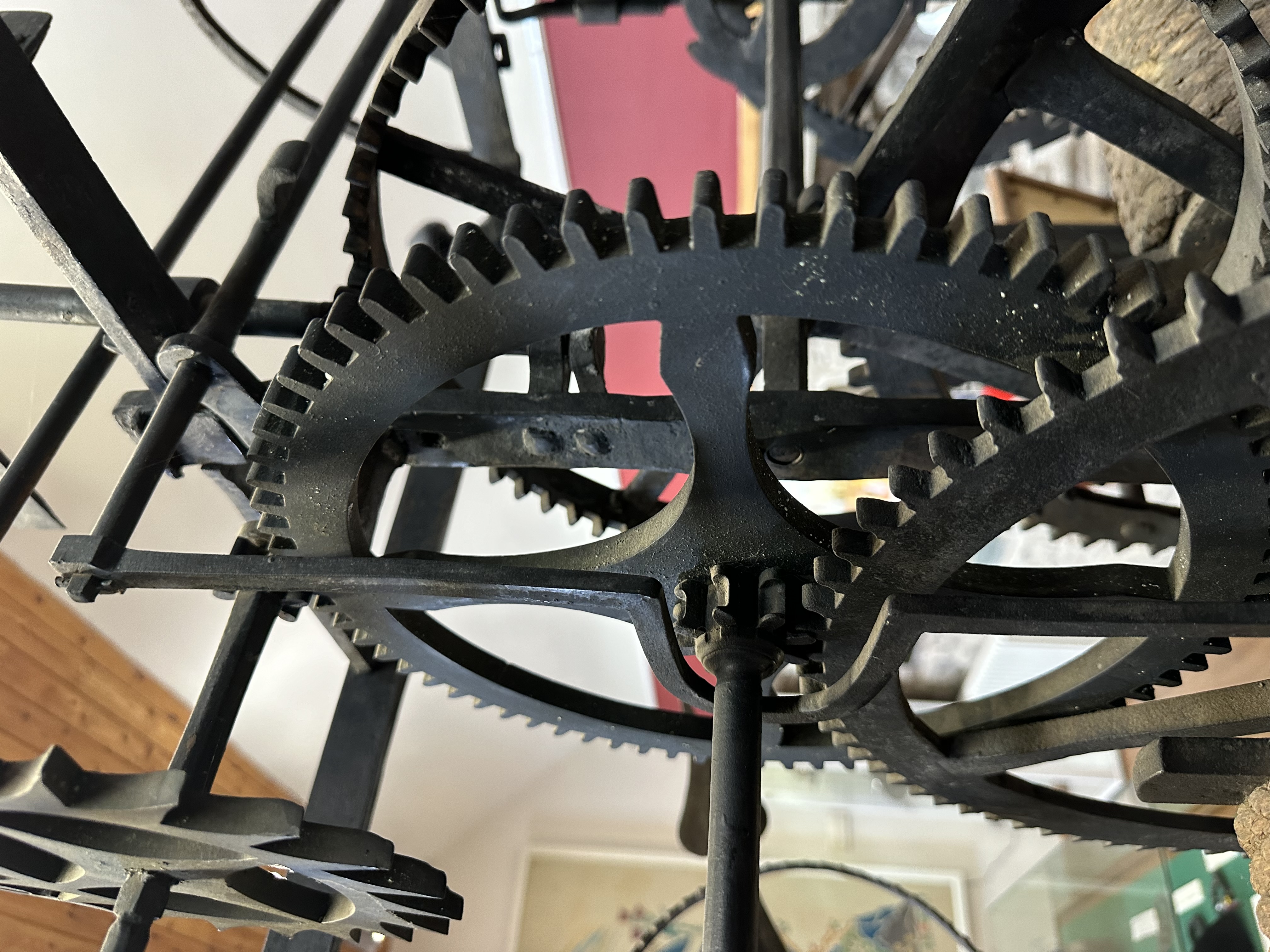
Mark trained as an electrician but had always had a fascination for clocks, and has worked for the Cumbria Clock Company for 22 years. His main interest and expertise are in large clocks in churches, public building etc. He had the honour of being one of the team that restored Big Ben during the covid pandemic.
The phrase “knocks to clocks” in the title of his talk relates to the fact the “knock” (or “knockie”) was the old Scottish word for large clocks. In England the majority of old clocks (around 6000) are found in church towers, but in Scotland there are only 5 in church towers, the majority of large public clocks being in tollbooths or clock towers. The oldest tollbooth clock is in Berwick on Tweed and dates from the 14th century (when the town was part of Scotland). The famous clock at the Singer factory in Clydebank was at one time the largest in the world; the faces were 25 feet in diameter, and when the hands were replaced in 1963 it required seven people to carry away the huge minute hand.
Old clocks originally had a mechanical mechanism based on weights and pendulums.
Sadly most have now been replaced by modern electric mechanisms, despite that fact that some old clocks had run for 400 years with no major maintenance, whereas electric mechanisms rarely last for more than 20 years. Mark explained that the changeover was largely due to the inconvenient need for constant winding of the mechanical clocks. He also pointed out that this changeover was particularly prevalent in Scotland, as in England historic clocks are protected by law, but no such legislation exists in Scotland.
In historical times each town and city had its own time zone, midday being the time when the sun reached its maximum altitude. In the days of slow horse-drawn transport this was of little consequence, but the coming of the railways and the need for timetables made it necessary to have a standard time throughout the country, and Greenwich Mean Time (GMT) was introduced. Interestingly there is a clock in Newton Stewart that has two dials, one showing the old local time and the other GMT.
Other interesting clocks in our region include Kirkcudbright Tollbooth, which dates from 1576 and still rings a bell for curfew at 6.00pm, New Galloway, which now has a modern mechanism but the old mechanical mechanism can be seen in the Stewartry Museum, and Sanquhar Tollbooth, which is the only mechanical clock in Dumfries and Galloway still cared for by the local Council. Nearly all mechanical clocks were made locally, but for some reason the 18th century clock on the Midsteeple in Dumfries was made in Stockport, near Manchester.
Mark’s encyclopaedic knowledge of both the mechanics and the history of our old clocks was very evident from his talk, and one hopes that this can translate into better protection for our historic clocks, in line with England.