
Jim Mackison
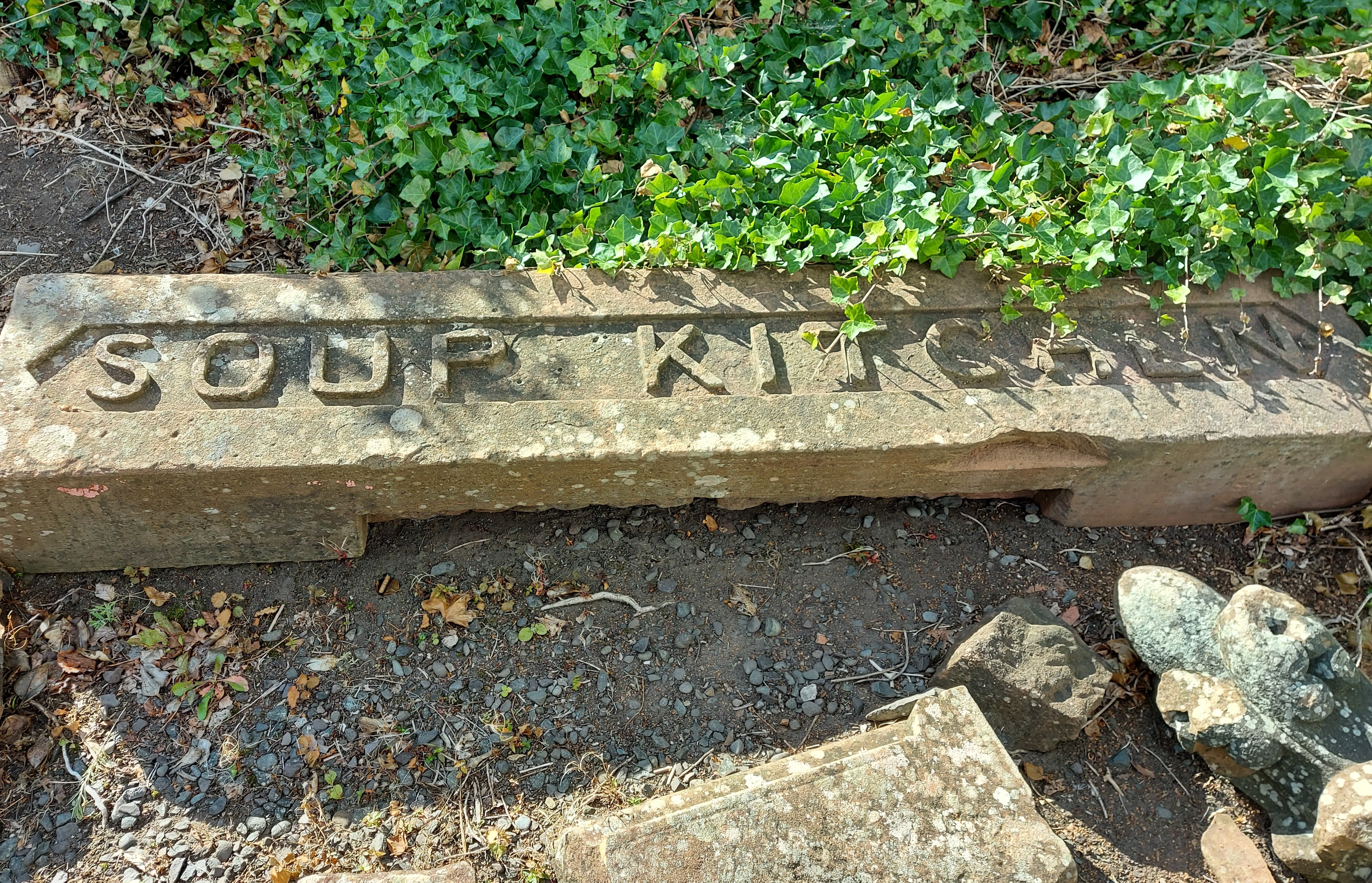
DGNHAS member Jim Mackison will delivered the society’s annual members’ lecture. Jim has researched the subject for several years, inspired initially by a stone lintel from a former soup kitchen now displayed in the garden of Dumfries Museum. That discovery sparked a wider investigation into the development, operation and eventual decline of soup kitchens in Scotland, with particular focus on Dumfries.
His research draws on a wide range of sources, including the British Newspaper Archive online and other documentary records. Jim highlights the importance of the local newspaper records preserved on microfiche at the Ewart Library in Dumfries, which provide detailed contemporary accounts.
Origins of the Soup Kitchen
The first recorded example of a soup kitchen was attributed to Benjamin Thompson, a United States loyalist during the American War of Independence. After leaving America and returning to Britain, Thompson demonstrated exceptional organisational and administrative ability and was eventually knighted. While working in Bavaria, he is believed to have established one of the earliest soup kitchens as an economical method of feeding large numbers of people. He promoted soup, particularly Scotch broth, as nutritious, easy to prepare and inexpensive.
The idea spread widely, especially in large urban centres across the UK. Some early soup kitchens were even supported by local authorities. The first Edinburgh soup kitchen, for example, was opened in the Assembly Rooms and marked by the presence of a military band!
Crisis and Expansion
The immediate period following the French Revolution and the Battle of Waterloo was marked by poor harvests and social unrest. Although government figures, including the Duke of Portland, considered measures to alleviate hardship and prevent potential unrest, soup kitchens were not widely implemented at that time. The true impetus came after the eruption of Mount Tambora in 1815. The resulting atmospheric dust led to the “Year Without a Summer” in 1816, causing catastrophic harvest failures across Europe. Organised poor relief in many areas took the form of soup kitchens.
Typically, soup was provided for the “deserving poor” at a cost of one halfpenny per quart, to be taken away in a suitable container. Relief was strictly regulated. It was not available to those already receiving poor relief, nor to the so-called “idle poor”, vagrants or beggars. In some areas, soup kitchens were influenced by religious or political interests, with the temperance movement often playing a prominent role.
Soup kitchens were rarely permanent institutions, tending instead to appear and disappear according to local economic conditions.
Dumfries Developments
The first recorded soup kitchen in Dumfries dates from 1817 and is said to have been established by the aptly named Mr Kitchin behind the George Inn. During the cholera epidemic of 1832, a soup kitchen was opened on what is now Irish Street, near the junction with Buccleuch Street. A larger facility soon followed near the Fleshmarket on Loreburn Street, reportedly capable of supplying soup for up to 1,000 people per day. By 1835, a more permanent kitchen had been established at the corner of the New Market. Similar facilities later developed in Haddon Place, Maxwelltown and at Brigend, areas then associated with poorer housing.
These kitchens depended heavily on financial donations, with contributors often publicly acknowledged. Donations in kind, such as vegetables, were also essential. Although subsidised, the soup was not free; users typically purchased tokens which were exchanged for the soup itself. Facilities were simple, requiring little more than a boiler, a heat source and basic ingredients. While most soup was taken away, some locations, such as the New Market soup kitchen, included small dining areas.
Decline and Legacy
Soup kitchens in Dumfries continued into the 20th century, including a well-known example near Munches Street. However, demand gradually declined. Slum clearance and modest improvements in living standards reduced reliance on such relief. Some former soup kitchens found new purpose providing school meals, but by the 1930s output was estimated to be only a third of what it had been 50 years earlier. By the end of the Second World War, soup kitchens had largely become obsolete.
Mr Mackison concluded by reflecting that while traditional soup kitchens have disappeared, the provision of charitable food support continues today through religious and voluntary groups. Modern food banks, he noted, remain a visible reminder that food insecurity has not been entirely consigned to history.